


1. Technology Overview
Space Weather AI × Next-Generation Radar technology
provides the infrastructure for safe use of space.
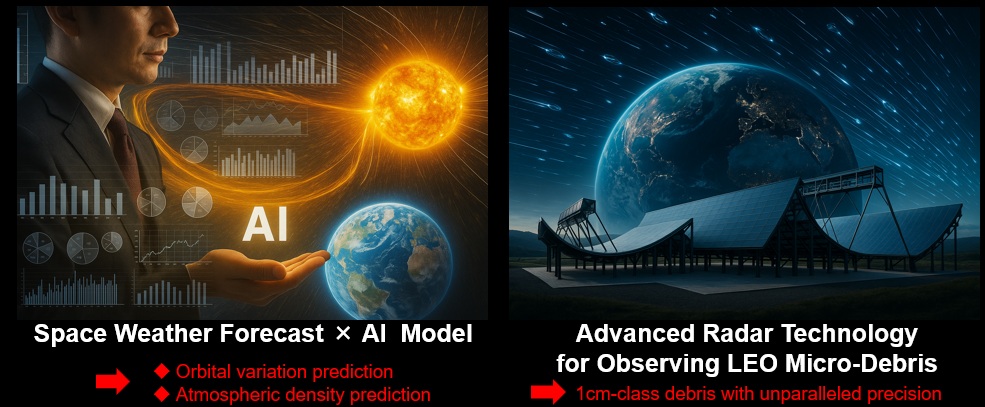
Our technology consists of two pillars: high-accuracy “Space Weather AI forecasting” and the “ultra-high-precision radar technology” that supports it. Working in concert, these technologies achieve an understanding of space-environment changes that would be unattainable by either alone.
2-1. Space Weather AI Engine
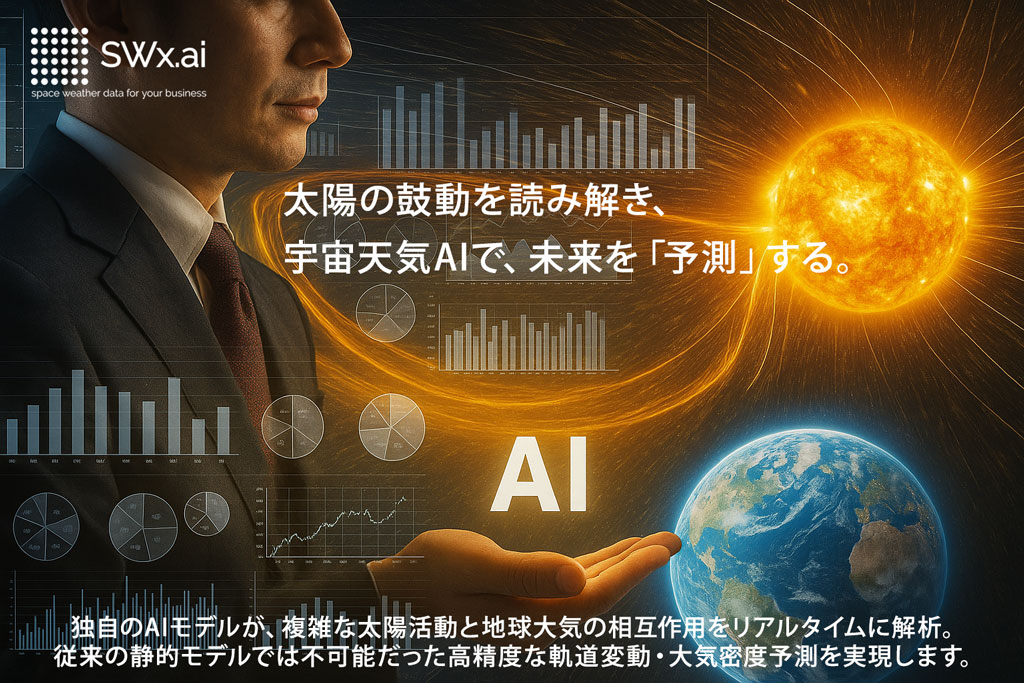
From space-environment changes to the future of satellites. Developing Space Weather AI that predicts the impacts of solar activity
—Why is accurate prediction of satellite/debris orbits so difficult?
The biggest influence on satellite orbits is the density variation of the “extremely rarefied atmosphere” that extends from about 100 to 500 km altitude. This atmospheric density changes constantly and complexly due to energy emitted by the Sun. Traditional orbit prediction has relied on “static,” empirical models that assume average solar conditions. These models cannot reflect sudden, dynamic events like geomagnetic storms in real time, which has been a fundamental cause of large prediction errors. The physical phenomena occurring in space are so complex that simply solving coupled equations has not been enough to predict the future accurately.

—Our approach: a fusion of physical laws and AI
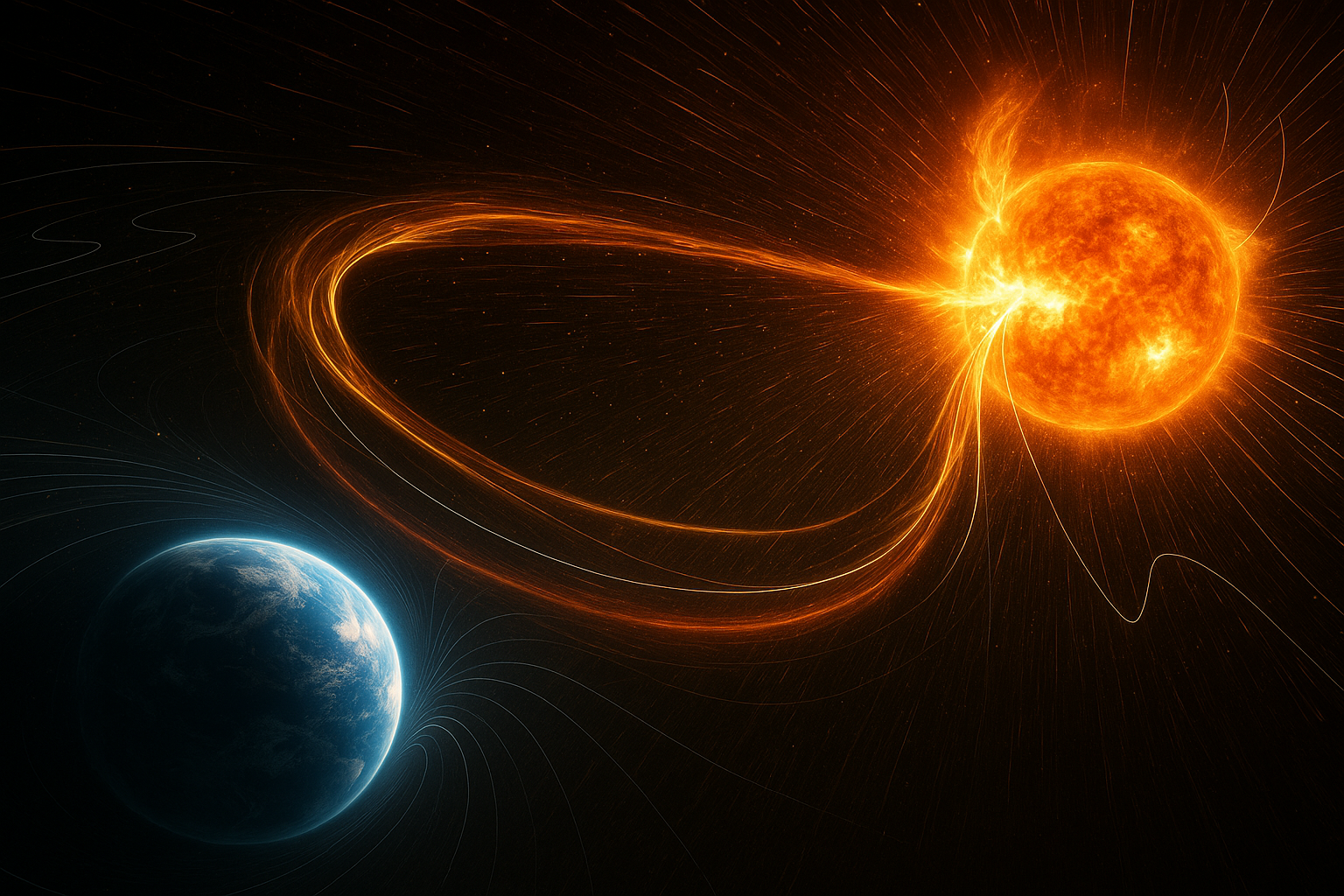
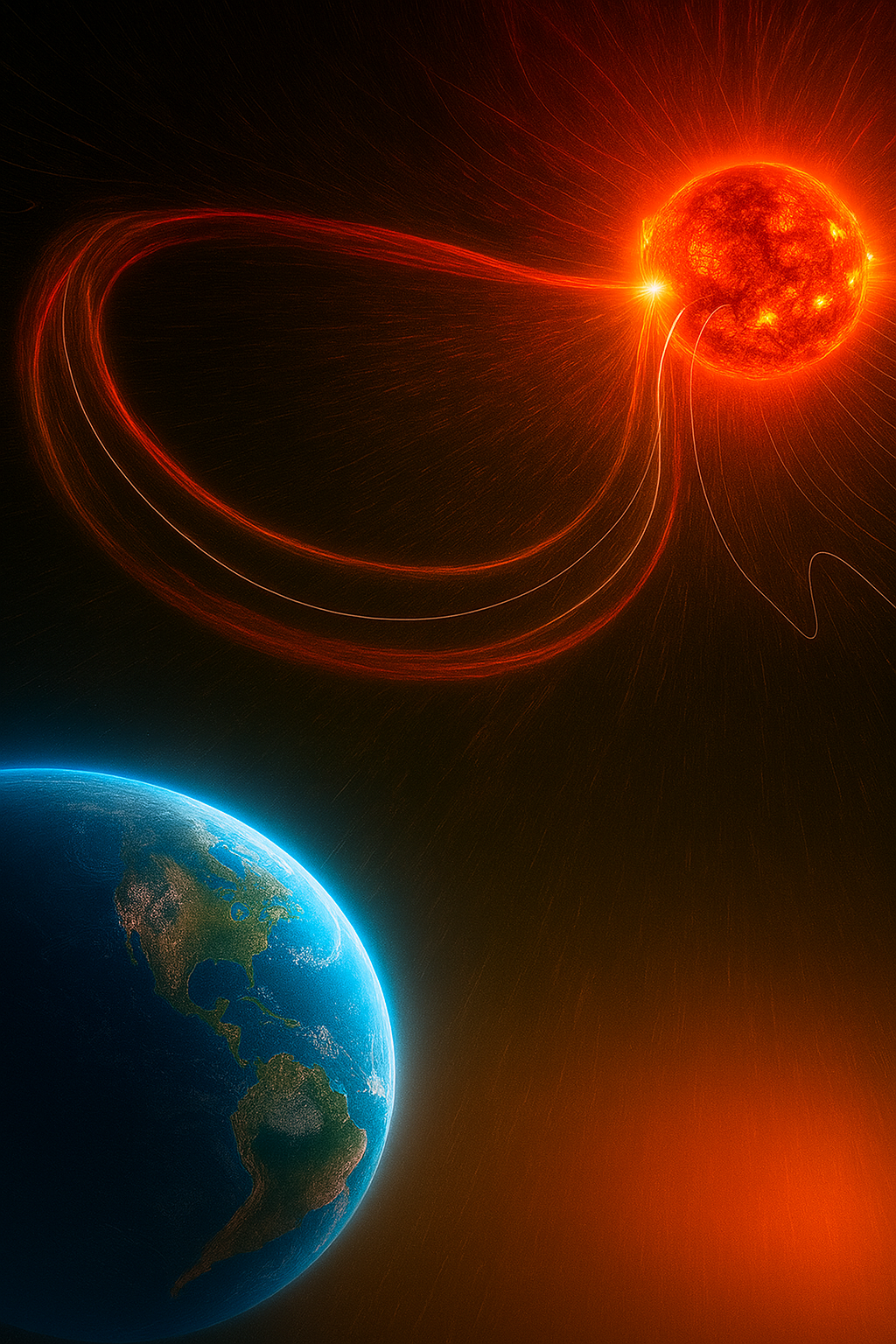
Our Space Weather AI solves this challenge at its root. The AI learns the chain of physical processes from solar-surface activity (solar flares, CMEs), through the solar wind propagating in interplanetary space, to interactions with Earth’s magnetosphere, ionosphere, and upper atmosphere.
Specifically, we feed in vast, diverse datasets—scientific-satellite data, geomagnetic observations, and measured orbit data from thousands of satellites. Grounded in state-of-the-art research findings for each physical phenomenon, we enable the AI to understand the physical reasons “why orbits change.” This makes high-accuracy predictions possible based on causality, not mere correlations.
—Our technological edge
While multiple companies offer orbit-analysis services, many still rely on conventional analytical methods or AI trained on limited data. We—Space Weather Company—are uniquely embedding the physical models of “space weather,” the root cause of orbit variations, deeply into AI to achieve highly accurate long-term prediction. This technological superiority is the source of our unwavering competitive advantage.
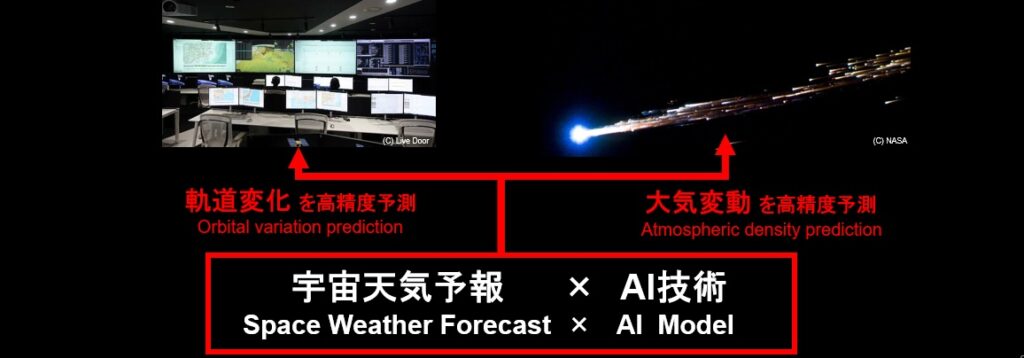
① Overwhelming prediction accuracy
We have succeeded in minimizing errors far beyond conventional methods in satellite-orbit prediction. As a result, collision-probability calculations improve dramatically, reducing unnecessary avoidance maneuvers.
② Real-time & dynamic forecasting
By continuously ingesting the latest observational data and updating our models, we respond in real time to sudden space-weather disturbances such as geomagnetic storms. We forecast a “living” space environment that static models could not capture.
③ Scalability and future-readiness
Our AI models will keep evolving by learning from high-quality data acquired by our planned next-generation debris radar and various observation satellites. Ultimately, we plan to develop a “digital-twin technology” that reproduces the entire near-Earth space environment in silico, laying the foundation for next-generation space-weather services.
2-2. Advanced Radar Technology
A next-generation radar—the “eyes” of space—that won’t miss even 1-cm threats
Publicly cataloged debris worldwide is currently limited to objects with diameters of 10 cm or more, numbering about 36,500. However, simulations estimate more than one million pieces at 1 cm or larger, and more than one hundred million at 1 mm or larger. Due to their small size, such micro-debris have been extremely difficult to observe continuously with conventional radar. Moreover, many existing observation systems primarily support their own satellite operations (e.g., by JAXA), so information sharing with the rapidly growing number of private satellite operators remains limited. In both observation capability and information-delivery systems, the current infrastructure has unfortunately not kept pace with the rapid expansion of space utilization.
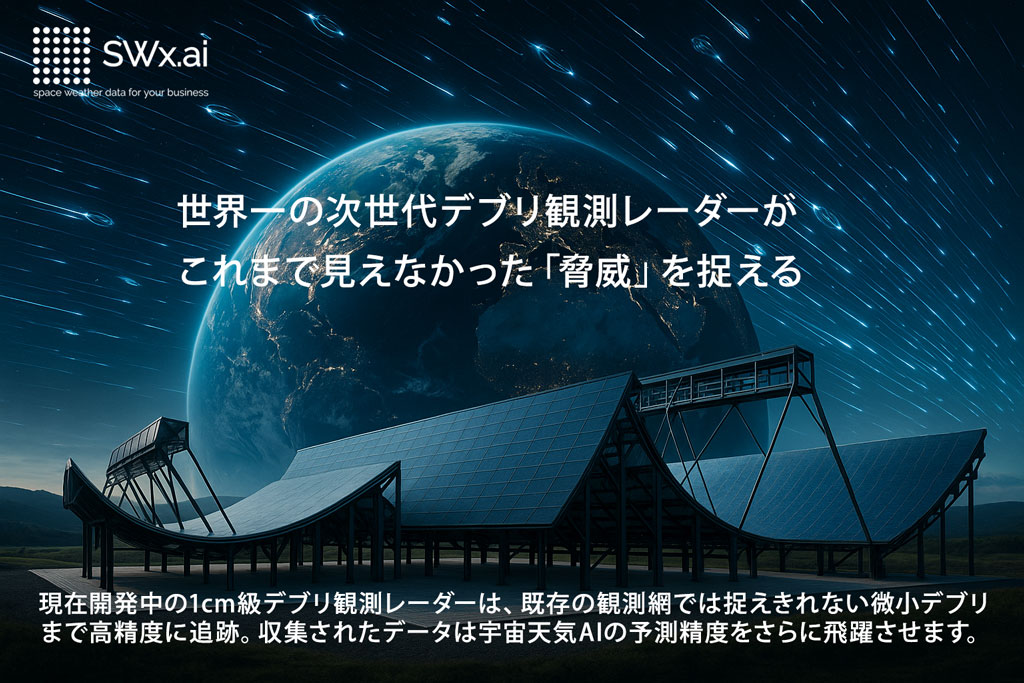
To address this challenge, we plan to develop a new radar specialized for debris observation, building on world-leading expertise cultivated through the development and operation of Kyoto University RISH’s large atmospheric “MU radar.” In collaboration with existing high-quality infrastructure and experts, we will advance technical demonstrations going forward.
We have “technologies” that only we can deliver
anywhere in the world.
What is the source of our competitive advantage?
The unprecedented, high-quality, high-frequency observation data obtained by our radar will become the best training data for our “Space Weather AI.” This enables a powerful synergy: AI greatly improves prediction accuracy, while AI’s predictions in turn enhance radar observation efficiency. This “synergy between AI-based orbit prediction and next-generation radar technology” is our greatest strength. Furthermore, our Space Weather AI has limitless potential as a solutions platform that not only avoids debris collisions but also protects space assets and maximizes their value. From satellite operators to national security and future space exploration—we support every player involved in space.